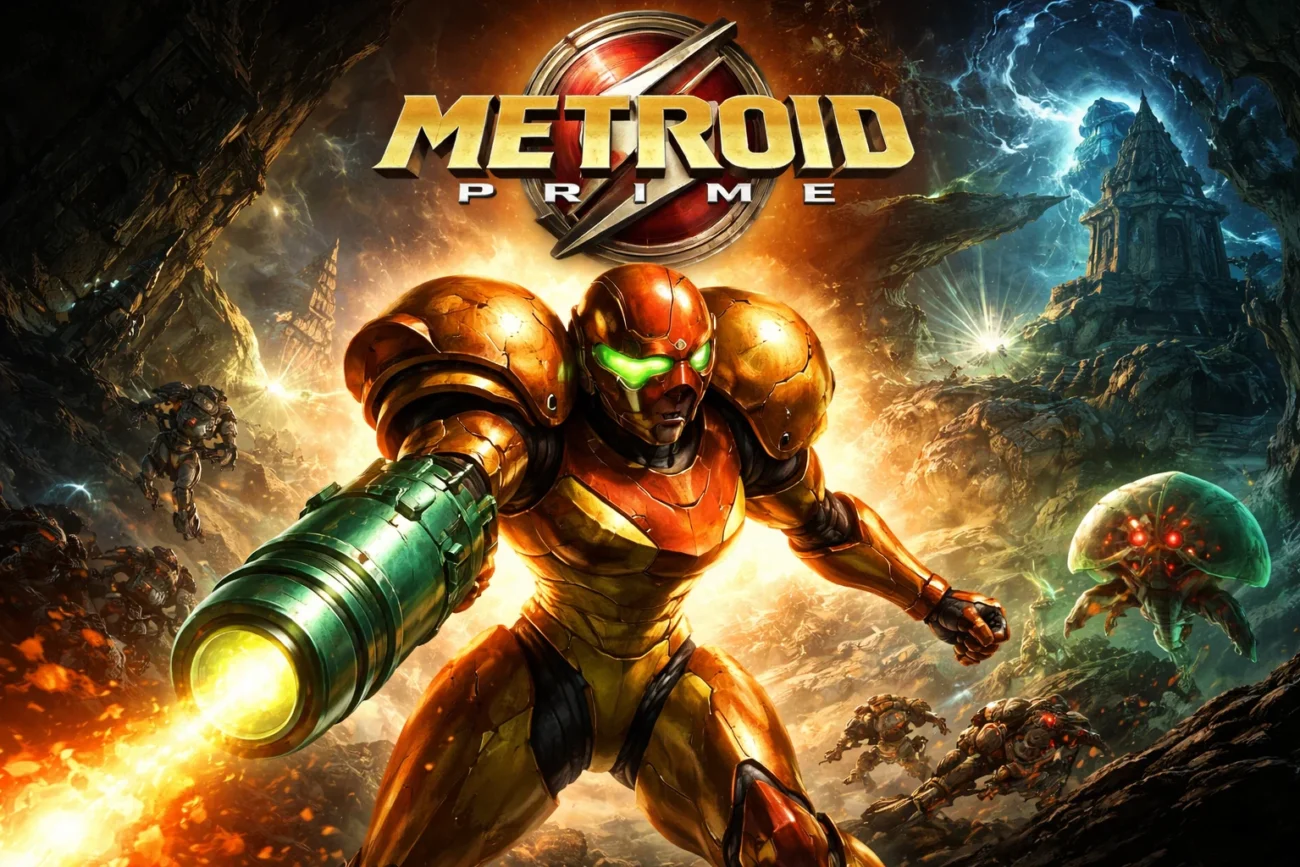
Introduction to Metroid Prime
Metroid Prime is a revolutionary video game that redefined the first-person adventure genre. Developed by Retro Studios and published by Nintendo in 2002 for the GameCube, it marked a significant departure from the traditional side-scrolling Metroid games. Unlike its predecessors, “Metroid Prime” embraced a fully 3D first-person perspective, blending exploration, combat, and puzzle-solving in a richly detailed sci-fi universe.
Players step into the boots of Samus Aran, an intergalactic bounty hunter, and explore the mysterious planet Tallon IV, unraveling the secrets of the Metroid lineage while facing formidable enemies and treacherous environments. Its unique combination of immersive storytelling, atmospheric design, and tight gameplay mechanics made it an instant classic.
The Storyline of Metroid Prime
Metroid Prime delivers a compelling narrative without relying heavily on dialogue or cutscenes. The story unfolds as players explore Tallon IV, a planet scarred by the destructive impact of Phazon, a mutagenic substance. Samus Aran is sent to investigate Space Pirates, who are attempting to harness Phazon’s power for their sinister purposes.
As players traverse different regions of the planet, they uncover the ancient Chozo civilization’s ruins and secrets, piecing together the planet’s history. The narrative depth lies in environmental storytelling, as logs, murals, and artifacts reveal the tragic past of Tallon IV.
This subtle yet rich approach to storytelling allowed players to become active participants in discovering the lore, a hallmark that elevated “Metroid Prime” above conventional action games of its time.
Gameplay Mechanics and Innovation
Metroid Prime is celebrated for its unique gameplay mechanics, which combine first-person shooting with exploration and platforming. Unlike traditional shooters that focus primarily on combat, “Metroid Prime” emphasizes exploration, discovery, and problem-solving.
Samus’s iconic Power Suit provides a variety of abilities, including the Morph Ball, Grapple Beam, and a range of weapon upgrades such as the Charge Beam and Missiles. Players must carefully navigate the alien terrain, unlock doors, and defeat bosses by exploiting environmental clues.
One of the game’s standout features is the scanning visor, which allows players to gather information about enemies, flora, and Chozo artifacts. This mechanic not only deepens immersion but also rewards players for engaging with the game world thoughtfully.
The Art and Atmosphere of Metroid Prime
A defining aspect of “Metroid Prime” is its atmospheric design. Retro Studios masterfully crafted a dark, alien world that balances beauty with danger. Each area of Tallon IV has its own distinct visual and auditory identity, from the lush, organic Phendrana Drifts to the foreboding, lava-filled Magmoor Caverns. The attention to detail in environmental textures, lighting, and sound design immerses players in a living, breathing planet.
The ambient soundtrack, composed by Kenji Yamamoto, reinforces the feeling of isolation and suspense, heightening tension as players explore uncharted territories. This combination of audio-visual excellence ensures that the world of Tallon IV feels both vast and mysterious, a place teeming with secrets waiting to be uncovered.
The Role of Boss Battles
Boss encounters in “Metroid Prime” are memorable, challenging, and integral to the game’s pacing. Unlike generic boss fights, each encounter is carefully designed to test players’ mastery of Samus’s abilities and environmental awareness. From the intimidating Metroid Prime itself to the massive Omega Pirates, battles require strategic thinking, precise aiming, and sometimes clever use of the environment.
These encounters serve as climactic moments that punctuate the exploration-heavy gameplay, providing a sense of accomplishment and progression. Moreover, the bosses are deeply connected to the story, often guarding critical artifacts or areas, which reinforces the game’s narrative cohesion.
Metroid Prime’s Influence on the Gaming Industry
Metroid Prime set new standards for first-person adventure games. Its emphasis on exploration, atmosphere, and environmental storytelling influenced countless titles in the years following its release. Games such as “Dead Space,” “BioShock,” and “Prey” drew inspiration from their immersive design philosophy, blending narrative depth with gameplay in innovative ways.
Metroid Prime demonstrated that first-person games could go beyond shooting mechanics and offer complex, rewarding experiences that prioritize player curiosity and problem-solving. Its success solidified the Metroid franchise as a cornerstone of Nintendo’s library and proved that risk-taking in game design could yield groundbreaking results.
Technical Achievements
From a technical perspective, Metroid Prime was a marvel for the GameCube era. The game pushed the console’s hardware to deliver expansive environments, detailed character models, and sophisticated lighting effects. Advanced rendering techniques allowed for realistic water physics, dynamic shadows, and fluid animations, all of which contributed to the immersive experience.
The game’s control system, which integrated the GameCube controller’s analog triggers for precise aiming and movement, set a precedent for first-person controls on consoles. These technical achievements showcased Retro Studios’ ability to maximize hardware capabilities while maintaining smooth, engaging gameplay.
Exploration and Level Design
Exploration lies at the heart of “Metroid Prime,” and its level design is a testament to thoughtful, non-linear game planning. Tallon IV is divided into interconnected regions, each offering unique challenges, hidden items, and environmental hazards. The game encourages players to backtrack with newly acquired abilities, unlocking previously inaccessible areas. This design creates a sense of organic discovery, rewarding curiosity and experimentation.
Secret areas, hidden power-ups, and collectible logs ensure that exploration is both meaningful and rewarding. The seamless integration of puzzles, environmental storytelling, and combat ensures that no area feels superficial, making every corner of Tallon IV a compelling place to explore.
The Soundtrack and Audio Design
The auditory experience in Metroid Prime is as integral as its visuals. Kenji Yamamoto’s soundtrack expertly balances eerie, atmospheric melodies with intense, action-driven themes. Ambient sounds, such as dripping water, alien wildlife, and distant machinery, enhance immersion and reinforce the feeling of isolation on a foreign planet.
Audio cues often serve gameplay purposes, signaling hidden items or alerting players to nearby enemies. The combination of music, environmental sounds, and subtle audio effects creates a cohesive and engaging sensory experience that draws players deeper into the world of Tallon IV.
Reception and Legacy
Upon release, “Metroid Prime” received critical acclaim for its innovative gameplay, atmospheric design, and technical achievements. Critics praised its seamless blend of first-person action, exploration, and narrative depth. The game won numerous awards, including “Game of the Year” accolades from multiple gaming publications, and it has consistently appeared on lists of the greatest video games of all time.
Its success led to two direct sequels, “Metroid Prime 2: Echoes” and “Metroid Prime 3: Corruption,” as well as the spin-off “Metroid Prime: Hunters.” In 2009, a remastered version, “Metroid Prime Trilogy,” was released for the Wii, introducing motion controls and bringing the series to a new generation of players.
Metroid Prime and Player Experience
What truly sets “Metroid Prime” apart is its focus on player experience. The game allows players to immerse themselves fully in Samus Aran’s journey, balancing moments of tension, exploration, and triumph. The scanning visor, for example, encourages players to engage deeply with the environment, fostering a sense of curiosity and discovery.
Unlike many contemporary games that guide players linearly, “Metroid Prime” trusts players to explore and uncover secrets at their own pace. This approach creates a personalized and memorable gaming experience, where each player’s journey through Tallon IV feels unique.
Cultural Impact
Metroid Prime has had a lasting cultural impact beyond the gaming world. Its protagonist, Samus Aran, continues to be one of the most iconic female characters in video game history. The game has inspired fan art, speedrunning communities, and cosplay, cementing its place in gaming culture.
Its influence extends to game design, where developers often cite Metroid Prime as a benchmark for blending exploration, narrative, and gameplay. The series has also contributed to discussions about the potential of video games as an art form, showcasing how immersive design and storytelling can create emotionally resonant experiences.
Challenges and Criticisms
Despite its acclaim, Metroid Prime is not without its criticisms. Some players found the first-person perspective and occasional backtracking disorienting, especially compared to the traditional side-scrolling Metroid games. Certain puzzles and environmental challenges could be perceived as overly complex or unintuitive, potentially frustrating some players. However, these criticisms are relatively minor compared to the overall positive reception, and many players consider the challenges a key component of the game’s rewarding design.
The Future of Metroid Prime
The legacy of “Metroid Prime” continues to influence the franchise and gaming industry. Fans eagerly anticipate new entries in the series, and rumors of remakes or sequels have fueled speculation for years. Nintendo has announced “Metroid Prime Remastered” for the Switch, promising updated graphics and modernized controls while preserving the core gameplay that made the original a classic.
This continued interest underscores the enduring appeal of “Metroid Prime” and its relevance to both long-time fans and new players discovering the franchise for the first time.
Conclusion
Metroid Prime is more than just a video game; it is a landmark in the history of interactive entertainment. Through its innovative first-person perspective, immersive exploration, atmospheric design, and compelling narrative, it redefined what players could expect from a sci-fi adventure game.
Its influence resonates in countless modern games, and its cultural significance continues to grow. For gamers, developers, and storytellers alike, “Metroid Prime” serves as a timeless example of how creativity, technical mastery, and attention to detail can converge to create an unforgettable experience.
You May Also Read Here: Chicago Cubs vs Arizona Diamondbacks match player stats
