Introduction to Marketing Fundamentals
Marketing is the lifeblood of every business. Without a structured approach to promoting products or services, even the most innovative offerings may fail to reach their intended audience. Understanding marketing fundamentals equips businesses and individuals with the tools to identify customer needs, create value, and communicate effectively.
Marketing is not merely advertising or selling; it encompasses a wide array of strategies, behaviors, and insights aimed at fostering long-term relationships with customers. By grasping marketing fundamentals, companies can strategically position themselves in the marketplace, differentiate themselves from competitors, and drive sustainable growth.
The Core Concept of Marketing
At its essence, marketing is about understanding and meeting customer needs. The American Marketing Association defines marketing as the activity, set of institutions, and processes for creating, communicating, delivering, and exchanging offerings that have value for customers, clients, partners, and society at large.
This definition highlights that marketing is multifaceted—it combines analysis, creativity, strategy, and communication. The fundamental goal of marketing is not just selling a product but building relationships and trust, ensuring customers recognize the value offered and are motivated to engage with the brand consistently.
The Four Ps of Marketing
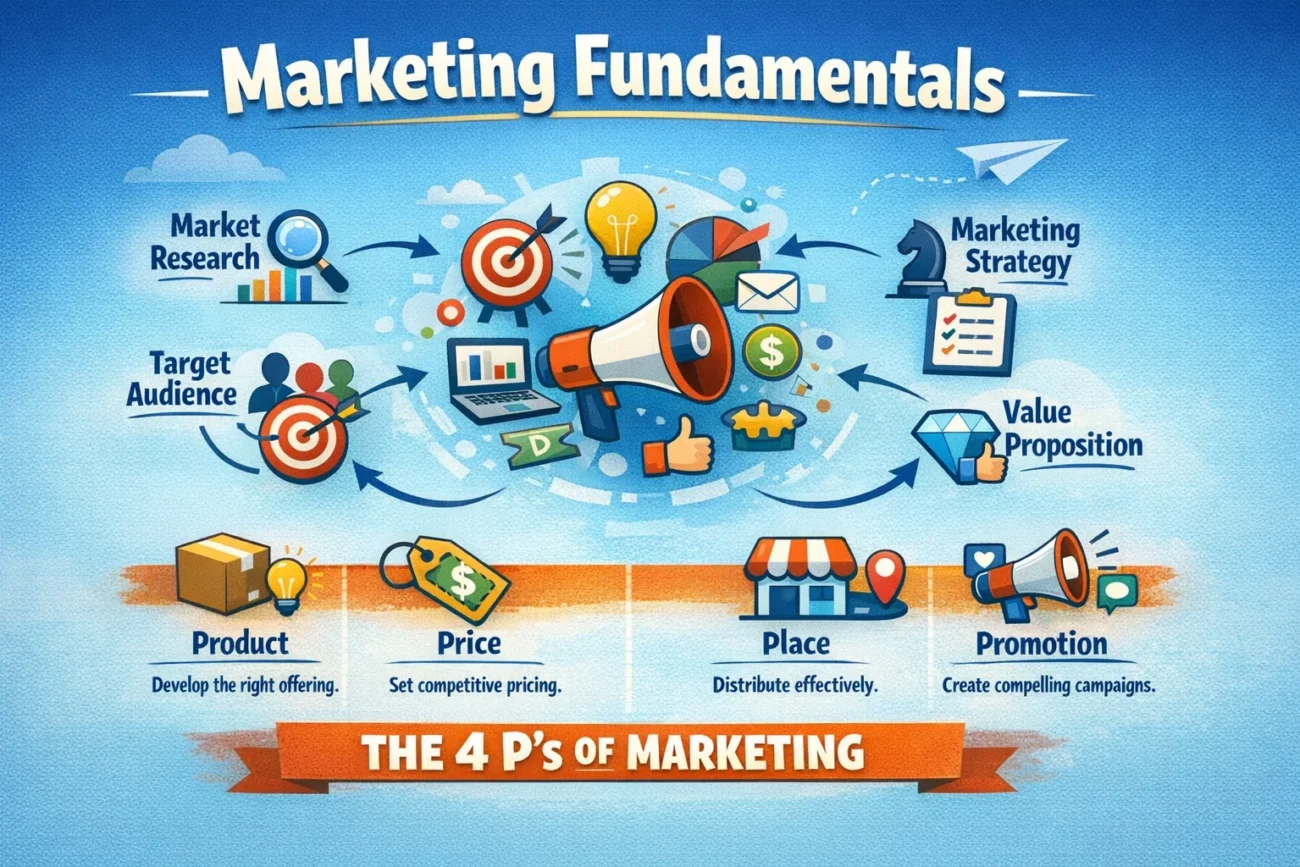
A cornerstone of marketing fundamentals is the concept of the Four Ps—Product, Price, Place, and Promotion. The product represents the good or service offered to fulfill a customer’s need. A successful product is developed based on market research and insights into customer preferences. Price reflects the value exchange and must be strategically set to balance profitability with competitiveness.
Place involves the distribution channels through which the product reaches the customer, whether online, in-store, or through third-party intermediaries. Finally, Promotion encompasses advertising, public relations, social media, and other strategies used to inform and persuade potential customers. Mastering the Four Ps allows marketers to craft holistic strategies that address every aspect of the customer journey.
Understanding Your Target Market
Identifying and understanding the target market is fundamental to effective marketing. A target market is a specific group of consumers most likely to purchase a company’s products or services. By analyzing demographic, psychographic, behavioral, and geographic data, marketers can segment audiences and tailor campaigns to their needs. This targeted approach increases marketing efficiency, improves customer satisfaction, and maximizes return on investment.
Ignoring the target market often results in wasted resources, misaligned messaging, and poor conversion rates. The ability to accurately define and understand the audience is the first step in building a successful marketing strategy.
Market Research and Analysis
Market research is a critical pillar of marketing fundamentals. It involves collecting and analyzing information about consumers, competitors, and industry trends to make informed decisions. Primary research, such as surveys, interviews, and focus groups, provides firsthand insights into customer behavior. Secondary research, including industry reports, competitor analysis, and online data, complements these insights.
By understanding market dynamics, businesses can identify opportunities, anticipate challenges, and develop strategies that resonate with their audience. Consistent research also enables marketers to track changes in customer preferences and adjust their approaches accordingly, ensuring long-term relevance.
Branding and Brand Positioning
Branding is more than a logo or tagline—it is the perception and emotional connection customers have with a business. Strong branding creates recognition, trust, and loyalty, which are crucial for long-term success. Brand positioning involves defining how a brand is perceived relative to competitors in the minds of consumers. This can be achieved through unique value propositions, messaging, and visual identity.
A well-positioned brand clearly communicates its benefits and differentiates itself from competitors, making it easier for consumers to make purchasing decisions. Understanding branding and positioning is essential for marketers aiming to create memorable and impactful customer experiences.
Consumer Behavior and Psychology
Marketing fundamentals cannot be fully understood without considering consumer behavior and psychology. Understanding why people buy, what motivates their decisions, and how they interact with brands allows marketers to design campaigns that influence purchasing behavior. Concepts such as the buyer’s journey, decision-making processes, and psychological triggers like scarcity, social proof, and reciprocity play a significant role in shaping effective marketing strategies.
By studying consumer behavior, marketers can predict trends, personalize communications, and create experiences that resonate on a deeper emotional level, driving loyalty and advocacy.
Digital Marketing Essentials
In the modern business landscape, digital marketing is an integral component of marketing fundamentals. It encompasses all online strategies, including search engine optimization (SEO), social media marketing, email marketing, content marketing, and paid advertising. Digital marketing allows businesses to reach global audiences, track engagement in real-time, and optimize campaigns for maximum impact.
Unlike traditional marketing, digital strategies provide measurable results, enabling marketers to calculate return on investment and refine tactics continuously. Understanding the digital landscape is crucial for businesses seeking growth and competitiveness in an increasingly online world.
Content Marketing and Storytelling
Content marketing is a strategic approach focused on creating and distributing valuable, relevant, and consistent content to attract and retain a clearly defined audience. Storytelling is a powerful tool within content marketing—it humanizes brands and builds emotional connections with customers. By crafting compelling narratives, marketers can communicate brand values, educate audiences, and inspire action.
Effective content marketing not only drives engagement but also positions businesses as thought leaders, establishing credibility and trust. Understanding how to create content that resonates is fundamental to sustaining long-term relationships and achieving marketing objectives.
Integrated Marketing Communications (IMC)
Integrated Marketing Communications (IMC) emphasizes the importance of aligning all marketing channels and messages to provide a consistent brand experience. It involves coordinating advertising, public relations, digital marketing, direct marketing, and sales promotions to ensure that every touchpoint reinforces the same brand message. IMC maximizes impact by avoiding fragmented communication, creating synergy across campaigns, and strengthening brand recognition.
By implementing integrated strategies, businesses can enhance customer experience, improve message retention, and increase overall marketing effectiveness. Mastering IMC is a key principle of marketing fundamentals that supports cohesive and strategic brand management.
The Role of Data and Analytics
Data-driven decision-making is at the heart of modern marketing fundamentals. Analytics allows marketers to measure performance, understand customer behavior, and optimize strategies. Tools like Google Analytics, CRM systems, and social media insights provide valuable information on engagement, conversion rates, and campaign effectiveness. By leveraging data, businesses can personalize marketing efforts, identify trends, and allocate resources efficiently.
Analytics facilitate continuous improvement by highlighting strengths, weaknesses, and areas of opportunity. A solid understanding of data interpretation and application is essential for marketers seeking measurable results and sustained growth.
Customer Relationship Management (CRM)
Customer Relationship Management (CRM) is a crucial aspect of marketing fundamentals. CRM systems help businesses manage interactions with current and potential customers, streamline processes, and improve profitability. By tracking customer interactions, purchase history, and preferences, companies can offer personalized experiences, resolve issues promptly, and nurture long-term relationships.
CRM also supports segmentation, targeted marketing, and loyalty programs, ensuring that marketing efforts are more relevant and effective. Investing in strong CRM practices enables businesses to retain customers, increase lifetime value, and build a loyal customer base—a core principle of successful marketing.
Ethical Marketing Practices
Ethical considerations are integral to marketing fundamentals. Ethical marketing involves transparency, honesty, fairness, and respect for customer rights. Businesses that engage in deceptive advertising, misuse data, or exploit vulnerable audiences risk damaging their reputation and losing trust. On the other hand, ethical marketing fosters credibility, builds customer loyalty, and aligns with corporate social responsibility initiatives.
Modern consumers are increasingly aware of ethical standards and prefer brands that demonstrate integrity. Understanding ethical principles ensures that marketing strategies are not only effective but also socially responsible and sustainable in the long term.
The Evolution of Marketing Strategies
Marketing fundamentals are not static; they evolve in response to technological advancements, societal shifts, and changing consumer behavior. Traditional marketing methods like print ads, radio, and direct mail have been complemented—or even replaced—by digital marketing, influencer collaborations, and experiential campaigns.
Understanding historical and emerging trends allows marketers to anticipate changes, adopt innovative approaches, and stay competitive. Businesses that fail to adapt risk falling behind, while those that embrace evolving strategies can seize new opportunities and maintain relevance in a dynamic marketplace.
Marketing Metrics and Performance Measurement
Measuring marketing performance is a fundamental principle that separates successful strategies from ineffective ones. Key performance indicators (KPIs) such as conversion rates, customer acquisition cost, customer lifetime value, engagement rates, and return on marketing investment (ROMI) provide insights into campaign effectiveness.
By tracking these metrics, marketers can make data-driven adjustments, allocate resources efficiently, and improve overall outcomes. Performance measurement also facilitates accountability and strategic planning, ensuring that marketing initiatives contribute meaningfully to business objectives and long-term growth.
The Importance of Innovation in Marketing
Innovation is a driving force behind effective marketing. Businesses that continually innovate their products, services, and promotional strategies can capture attention, differentiate themselves, and stay ahead of competitors. Marketing innovation may involve adopting new technologies, experimenting with unconventional campaigns, or developing creative customer experiences.
Embracing innovation allows companies to respond to market changes quickly, explore new opportunities, and maintain a competitive edge. Understanding the role of innovation in marketing fundamentals is essential for businesses aiming to sustain relevance and inspire customer loyalty.
Global Marketing Considerations
In a globalized economy, marketing fundamentals extend beyond local markets to include international strategies. Global marketing requires an understanding of cultural differences, legal regulations, economic conditions, and consumer preferences in various regions. Standardized strategies may not work across diverse markets, making localization and cultural sensitivity crucial.
Companies must adapt messaging, product offerings, and distribution channels to meet the unique needs of each market. By incorporating global considerations into marketing fundamentals, businesses can expand internationally, build brand recognition worldwide, and achieve sustainable growth across multiple regions.
Conclusion
Marketing fundamentals are the foundation upon which all successful business strategies are built. From understanding customer needs and conducting thorough market research to implementing data-driven campaigns, branding, and ethical practices, these principles guide marketers in creating value and fostering lasting relationships.
As Marketing Fundamentals continue to evolve, mastering these fundamentals ensures that businesses remain adaptable, innovative, and competitive. By investing time and resources in understanding marketing at its core, companies can unlock opportunities, maximize growth, and achieve long-term success in a dynamic and ever-changing business landscape.
You May Also Read Here: FlickMagazine
