Introduction to Telecom Expense Management
In today’s fast-paced business environment, managing telecommunications costs efficiently has become a critical component of operational success. Telecom expense management (TEM) refers to the processes, tools, and strategies that organizations employ to monitor, control, and optimize their telecommunications expenses. As businesses grow and adopt more complex communication infrastructures, the cost of phone, internet, and data services can escalate rapidly.
Without proper management, these expenses can significantly impact the bottom line. Implementing a robust TEM system allows companies to gain visibility over their telecom assets, identify billing errors, reduce wasteful spending, and ensure compliance with service agreements.
The Importance of Telecom Expense Management
The significance of telecom expense management cannot be overstated. Telecommunications represent one of the largest controllable operating expenses for many organizations, especially those with multiple offices, remote employees, or extensive mobile fleets. By leveraging TEM solutions, businesses can:
-
Gain complete visibility into telecom usage and costs.
-
Detect and correct billing errors from carriers.
-
Optimize telecom contracts and vendor agreements.
-
Implement policies that prevent unauthorized or inefficient usage.
-
Reduce unnecessary expenditures, freeing up funds for other strategic initiatives.
A strong TEM strategy not only cuts costs but also supports organizational efficiency and accountability. Companies that invest in telecom expense management often report improved budgeting accuracy, enhanced procurement decisions, and better resource allocation across departments.
Key Components of Telecom Expense Management
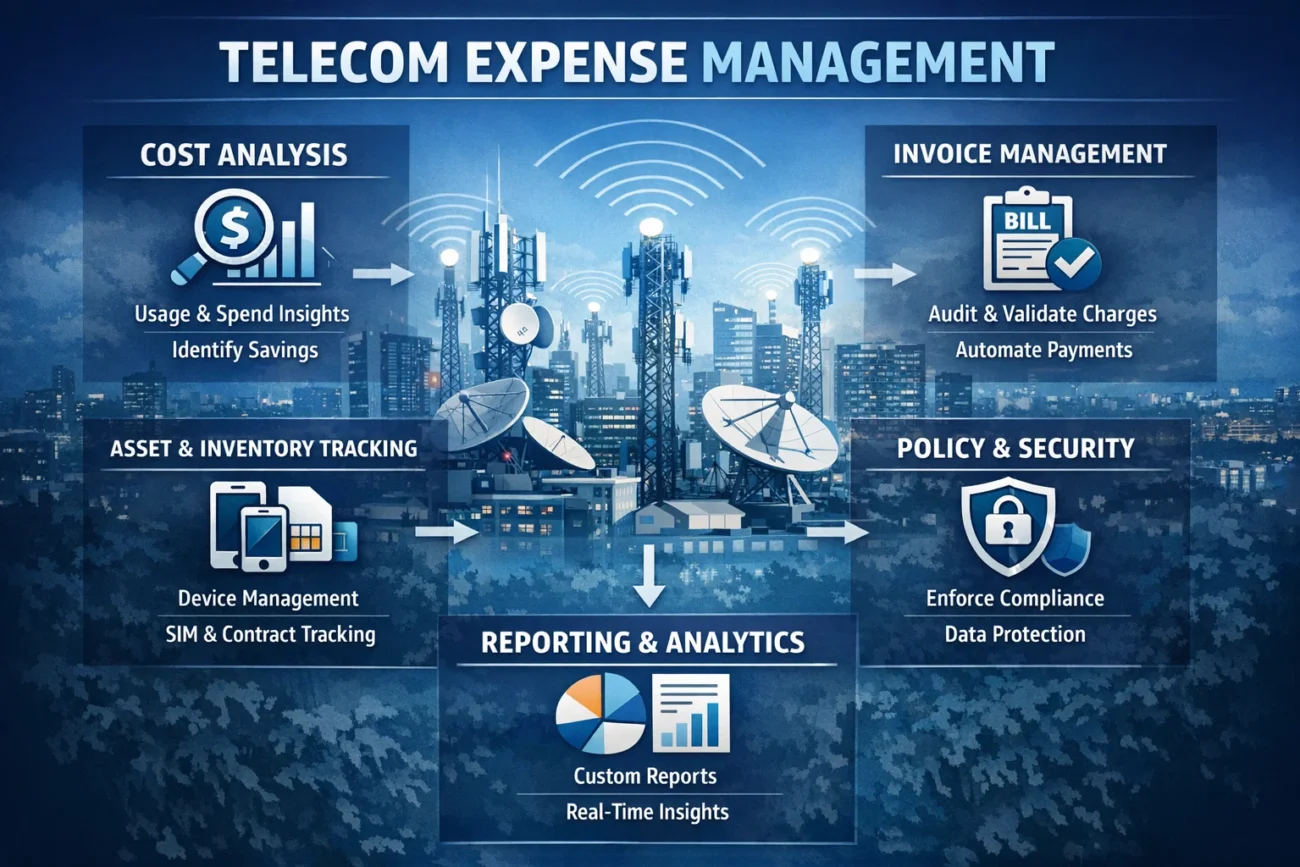
Effective telecom expense management encompasses several critical components:
-
Invoice Management: Automated solutions can validate and audit telecom invoices to ensure charges match contractual agreements, preventing overbilling.
-
Asset Management: Keeping track of all devices, lines, and services helps organizations avoid paying for unused or redundant resources.
-
Contract Management: Evaluating contracts for competitiveness and ensuring compliance helps in renegotiating better terms with service providers.
-
Usage Monitoring: Tracking call, data, and mobile usage provides insights into consumption patterns, helping enforce company policies and control costs.
-
Reporting and Analytics: Advanced TEM platforms provide dashboards and reports that highlight spending trends, cost centers, and opportunities for savings.
By integrating these components, organizations can achieve a comprehensive approach to telecom expense management, which drives efficiency and cost savings across their operations.
Benefits of Telecom Expense Management
Implementing telecom expense management offers a multitude of benefits. The most immediate advantage is cost reduction. Studies have shown that businesses can reduce their telecom expenses by 10% to 30% through effective TEM practices. This saving comes from identifying billing discrepancies, eliminating redundant lines or services, and negotiating more favorable contracts.
Beyond cost savings, TEM improves operational efficiency. Automated systems reduce the time employees spend managing invoices, tracking usage, and resolving discrepancies. This allows IT and finance teams to focus on strategic initiatives rather than administrative tasks. Moreover, TEM enhances compliance by ensuring organizations adhere to internal policies, regulatory requirements, and vendor agreements.
A well-executed telecom expense management program also provides strategic insights. By analyzing telecom usage patterns, businesses can forecast future needs, plan network expansions, and optimize their IT infrastructure. This proactive approach helps prevent service disruptions, supports growth, and enhances decision-making.
Challenges in Telecom Expense Management
Despite its clear benefits, telecom expense management comes with several challenges. One of the main hurdles is the complexity of telecom services and billing structures. With multiple carriers, service types, and international contracts, manually managing expenses becomes nearly impossible for large organizations.
Another challenge is data accuracy. Without a centralized TEM system, tracking telecom usage and validating invoices can be prone to human error. Unauthorized usage, unused lines, and overbilling can go unnoticed, resulting in financial losses.
The rapid pace of technological change in telecommunications can complicate expense management. Organizations are increasingly adopting cloud-based communication tools, mobile devices, and IoT solutions, which require TEM processes to continuously adapt to new service models and cost structures.
Strategies for Effective Telecom Expense Management
To overcome these challenges, businesses should adopt several key strategies for telecom expense management:
-
Centralize Data: Consolidating all telecom invoices, contracts, and usage data into a single system enhances visibility and simplifies analysis.
-
Automate Processes: Leveraging TEM software automates invoice validation, usage monitoring, and reporting, reducing errors and administrative burden.
-
Conduct Regular Audits: Periodic audits of telecom expenses ensure that charges are accurate and resources are utilized efficiently.
-
Optimize Vendor Contracts: Reviewing and renegotiating service agreements can help secure more favorable rates and terms.
-
Implement Usage Policies: Clear policies regarding device usage, mobile plans, and data consumption can prevent unnecessary expenses and encourage responsible behavior.
-
Leverage Analytics: Utilizing analytics tools helps identify trends, forecast needs, and uncover opportunities for savings across departments or business units.
These strategies, when consistently applied, strengthen the effectiveness of telecom expense management and create a culture of accountability and cost awareness within the organization.
Telecom Expense Management for Enterprises
Large enterprises often face unique challenges when it comes to managing telecommunications expenses. With thousands of devices, multiple office locations, and global operations, manual oversight becomes impractical. Enterprise-focused telecom expense management solutions provide advanced automation, real-time reporting, and comprehensive visibility across the entire organization.
Enterprise TEM platforms integrate with ERP and finance systems, enabling seamless workflows and accurate cost allocation. They also support multi-carrier environments, making it easier to manage international services and roaming charges. By adopting a centralized approach, enterprises can standardize telecom processes, enforce policies consistently, and negotiate enterprise-level contracts that maximize cost efficiency.
Telecom Expense Management in the Cloud Era
The rise of cloud-based communication tools has transformed telecom expense management. Unified communications, VoIP, and SaaS platforms offer flexibility and scalability, but they also introduce new cost management challenges. Without proper TEM practices, cloud expenses can spiral out of control due to pay-as-you-go models, multiple subscriptions, and overlapping services.
Cloud-based TEM solutions provide automated tracking and cost allocation for all cloud communication services. They allow organizations to monitor usage in real time, detect anomalies, and optimize subscriptions according to actual needs. By embracing cloud-aware telecom expense management, businesses can maintain control over their evolving digital communication infrastructure while keeping costs predictable.
Implementing Telecom Expense Management in Organizations
Implementing telecom expense management requires a structured approach that involves assessment, planning, execution, and continuous improvement. The first step is conducting a comprehensive telecom audit to understand current spending patterns, contract terms, and resource utilization.
Once the audit is complete, organizations can develop a TEM policy that clearly defines roles, responsibilities, and usage guidelines. This policy should cover areas such as mobile device usage, internet bandwidth allocation, roaming limits, and procurement processes.
The Role of Technology in Telecom Expense Management
Technology is a cornerstone of modern telecom expense management. Advanced TEM platforms leverage AI, machine learning, and automation to simplify complex processes. AI-driven analytics can detect billing anomalies, identify trends, and recommend cost-saving actions, while automation reduces manual intervention and human error.
Mobile and cloud-based TEM applications offer accessibility and real-time insights for dispersed teams. Employees can track expenses, submit tickets, and approve invoices from anywhere, enhancing operational efficiency and responsiveness. Investing in technology-driven telecom expense management ensures that organizations remain agile and capable of managing ever-growing telecom infrastructures.
Telecom Expense Management for Small and Medium Businesses
While large enterprises often dominate the conversation around TEM, small and medium businesses (SMBs) also benefit significantly from telecom expense management. SMBs may have fewer resources and smaller IT teams, making efficient expense management even more critical.
By implementing TEM solutions, SMBs gain access to the same insights and cost control capabilities as larger organizations. Even simple automation of invoice validation, contract tracking, and usage monitoring can prevent overpayments and reduce administrative workload. For SMBs, effective telecom expense management can level the playing field, allowing them to compete more effectively and reinvest savings into growth initiatives.
Future Trends in Telecom Expense Management
The landscape of telecom expense management continues to evolve. Emerging trends include:
-
Integration with IT Asset Management (ITAM): Combining TEM with ITAM provides a holistic view of all technology-related costs.
-
Sustainability and Green Telecom Initiatives: Companies are increasingly tracking energy consumption and environmental impact alongside telecom expenses.
-
AI-Powered Decision Making: Advanced analytics and predictive modeling will allow organizations to proactively manage costs and optimize service usage.
-
IoT and Mobile Expansion: As IoT devices proliferate, TEM solutions will need to manage and optimize a growing number of connected assets.
These trends highlight the importance of a proactive, technology-driven approach to telecom expense management, ensuring that organizations stay ahead of cost, compliance, and operational challenges.
Choosing the Right Telecom Expense Management Solution
Selecting the right TEM solution is crucial for maximizing benefits. Organizations should consider several factors:
-
Scalability: The solution should grow with the organization and handle increasing complexity.
-
Automation Capabilities: Automated invoice auditing, reporting, and policy enforcement reduce errors and workload.
-
Integration: Seamless integration with existing ERP, finance, and IT systems ensures smooth operations.
-
Analytics and Reporting: Advanced dashboards and analytics provide actionable insights for strategic decision-making.
-
Vendor Support: Reliable customer support and vendor expertise help organizations navigate challenges and optimize their TEM processes.
By carefully evaluating these criteria, businesses can implement a telecom expense management system that delivers measurable ROI and long-term value.
Conclusion
Telecom expense management is an essential practice for businesses of all sizes. By providing visibility, control, and optimization of telecommunications expenses, TEM enables organizations to reduce costs, improve efficiency, and make informed strategic decisions.
Organizations that adopt a proactive and technology-enabled approach to telecom expense management will be better positioned to navigate complexity, prevent financial leakage, and gain a competitive advantage in their industry.
You May Also Read Here: Minnesota Vikings vs Dallas Cowboys match player stats
