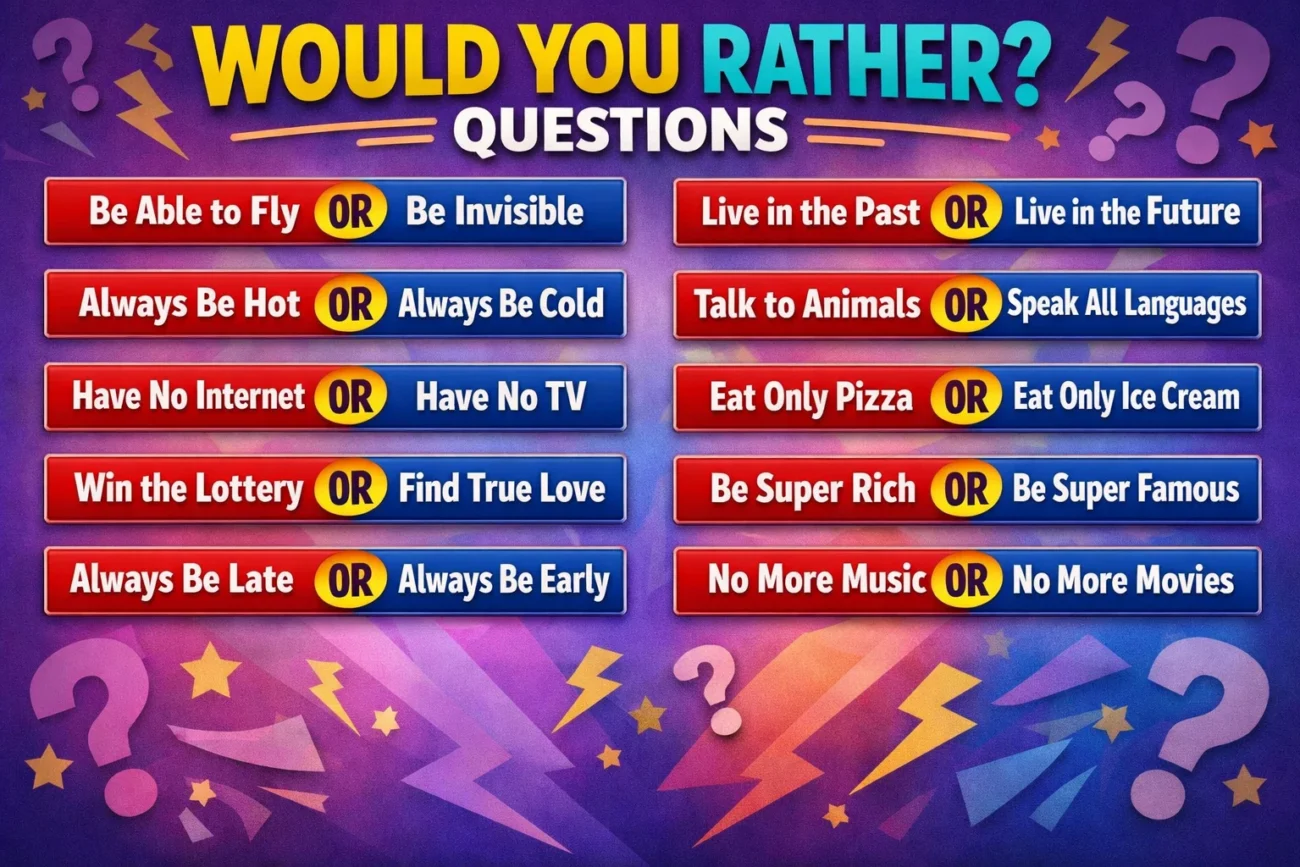
Introduction to Would You Rather Questions
Would you rather questions are more than just a casual party game; they are a powerful conversation starter that sparks imagination, humor, and sometimes deep self-reflection. At their core, these questions present two challenging, funny, or thought-provoking choices, forcing participants to pick one option—even when both seem equally appealing or equally terrible. The beauty of Would You Rather Questions lies in their simplicity.
They require no preparation, no materials, and no special skills, yet they can instantly energize a group, break awkward silences, or strengthen bonds between friends, families, couples, and even coworkers. Whether lighthearted or deeply philosophical, these questions encourage people to reveal preferences, values, and personality traits in a natural, entertaining way.
Why Would You Rather Questions Are So Popular
The widespread popularity of would you rather questions comes from their universal appeal. Anyone, regardless of age, culture, or background, can participate. The questions can be adapted to fit any setting, from classrooms and road trips to team-building events and social media challenges.
They also tap into a fundamental human instinct: decision-making. People enjoy weighing pros and cons, imagining hypothetical scenarios, and defending their choices. In a world filled with fast-paced digital content, would you rather offer a refreshing, interactive experience that encourages real conversation rather than passive consumption?
The Psychology Behind Would You Rather Questions
From a psychological perspective, would you rather questions are fascinating because they reveal how people think under pressure. When faced with two options, individuals must quickly evaluate risks, rewards, emotions, and personal values. Some people approach the questions logically, while others rely on intuition or emotion.
These choices can uncover hidden fears, dreams, and priorities. For example, a question about choosing between wealth and happiness can expose what someone truly values most in life. This makes would you rather a subtle yet effective tool for understanding human behavior.
Would You Rather Questions as Icebreakers
One of the most common uses of would you rather questions is as icebreakers. In social or professional environments where people may not know each other well, these questions create a relaxed atmosphere. They eliminate the pressure of small talk by offering a clear topic of discussion. Because the questions are hypothetical, participants feel safe sharing their thoughts without fear of judgment. This makes them especially useful in classrooms, workshops, meetings, and online communities where building rapport is essential.
Funny Would You Rather Questions and Their Appeal
Funny would you rather questions are often the most memorable. They rely on absurd scenarios, exaggerated consequences, or silly choices that make people laugh. Humor plays a crucial role in social bonding, and these questions create shared laughter that brings people closer together. Choosing between ridiculous options like having spaghetti hair or sneezing glitter for life encourages creativity and playful thinking. The fun lies not just in the answer, but in the explanations people give, often leading to hilarious debates and unexpected insights.
Deep and Thought-Provoking Would You Rather Questions
While many would you rather questions are lighthearted, others explore deeper themes such as morality, relationships, success, and identity. These thought-provoking questions challenge participants to consider complex issues in a simplified format. Being forced to choose between two difficult options can lead to meaningful discussions and self-discovery. These types of questions are often used in educational or therapeutic settings to encourage critical thinking, empathy, and open dialogue.
Would You Rather Questions for Kids
Would you rather questions are also highly effective for children. They promote imagination, communication skills, and decision-making in a fun and engaging way. Kid-friendly questions often involve fantastical elements like superheroes, animals, or magical powers. These questions help children express preferences and emotions while developing confidence in their ability to make choices. Parents and educators frequently use would you rather as a learning tools that feel more like play than instruction.
Would You Rather Questions for Teens
For teenagers, would you rather questions provide a safe outlet for self-expression. This age group is often navigating identity, friendships, and peer pressure. Questions tailored to teen interests—such as school life, social media, or future goals—encourage honest conversations without feeling intrusive. Teens enjoy debating their answers, which helps them articulate opinions and respect differing viewpoints. In group settings, these questions can strengthen friendships and foster a sense of belonging.
Would You Rather Questions for Adults
Adults often appreciate more nuanced would you rather questions that reflect real-life dilemmas. Topics may include career choices, relationships, finances, or lifestyle preferences. These questions can be humorous, serious, or a mix of both. In adult social gatherings, they often lead to engaging discussions that go beyond surface-level conversation. They can also be surprisingly revealing, showing how experiences and responsibilities shape decision-making over time.
Using Would You Rather Questions in Relationships
Couples frequently use would you rather questions to learn more about each other. These questions can be playful, romantic, or deeply personal. They open the door to conversations about dreams, fears, and expectations in a non-confrontational way. By discussing hypothetical scenarios, partners can explore compatibility and strengthen emotional intimacy. Even long-term couples can discover new insights about each other through thoughtfully crafted questions.
Would You Rather Questions for Parties and Gatherings
At parties and social events, would you rather questions act as instant entertainment. They require no setup and can involve everyone at once. Party-friendly questions are usually fast-paced, funny, and easy to answer, keeping the energy high. Hosts often use them as group games, encouraging participants to move to different sides of the room based on their choice. This physical interaction adds another layer of fun and keeps people engaged.
Educational Benefits of Would You Rather Questions
In educational settings, would you rather questions are surprisingly effective teaching tools. Teachers use them to introduce topics, encourage participation, and assess student understanding. By framing lessons as choices, educators make abstract concepts more relatable. These questions also promote respectful debate and active listening, essential skills in both academic and real-world contexts. Learning becomes interactive rather than passive, which improves retention and engagement.
Would You Rather Questions in Team Building
In the workplace, would you rather questions are often used in team-building activities. They help employees connect on a personal level without crossing professional boundaries. Light, work-appropriate questions encourage collaboration, reduce stress, and improve communication. When team members understand each other’s perspectives and personalities, cooperation naturally improves. This makes would you rather a simple yet powerful tool for improving workplace culture.
Creative Writing and Would You Rather Questions
Writers and content creators frequently use would you rather questions as creative prompts. Each question presents a scenario that can be expanded into a story, essay, or character study. By choosing one option, writers explore consequences, motivations, and emotions. This technique helps overcome writer’s block and sparks fresh ideas. It also encourages imaginative thinking by pushing creators to consider unusual or extreme situations.
Social Media and Would You Rather Questions
On social media platforms, would you rather questions thrive because they encourage interaction. Users enjoy voting, commenting, and debating their choices. These questions are highly shareable and adaptable to trends, making them popular for polls, stories, and posts. Content creators use them to boost engagement and connect with their audience on a more personal level. The simplicity of the format makes it easy for anyone to participate, regardless of platform.
How to Create Unique Would You Rather Questions
Creating unique would you rather questions requires creativity and an understanding of your audience. The best questions balance difficulty and fun, making both options equally compelling. Mixing humor with realism often produces the most engaging results. Adding unexpected twists or combining unrelated concepts can make questions feel fresh and original. The goal is to spark curiosity and discussion, not to make the choice obvious.
Common Mistakes to Avoid
While would you rather questions are simple, there are common mistakes to avoid. Questions that are too one-sided can feel boring, as the answer is obvious. Overly offensive or insensitive topics can make participants uncomfortable and shut down conversation. It’s important to tailor questions to the audience and setting, ensuring they are inclusive and respectful. Thoughtful phrasing keeps the experience enjoyable for everyone involved.
The Timeless Appeal of Would You Rather Questions
The enduring popularity of would you rather questions proves their timeless appeal. They have been passed down through generations, evolving with cultural trends while maintaining their core simplicity. No matter how technology or social norms change, people will always enjoy imagining scenarios and making choices. This adaptability ensures that would you rather remain relevant in both traditional and modern contexts.
Conclusion
Would you rather questions may seem like simple entertainment, but their impact goes far beyond fun and games. They foster connection, creativity, self-awareness, and meaningful conversation. From casual gatherings to educational environments, these questions adapt effortlessly to any situation.
Their ability to reveal personality, spark laughter, and encourage thoughtful discussion makes them a valuable social tool. Whether used to pass time, deepen relationships, or inspire ideas, would you rather questions continue to capture the imagination and bring people together in a uniquely engaging way.
You May Also Read Here: Google Block Breaker
