Introduction
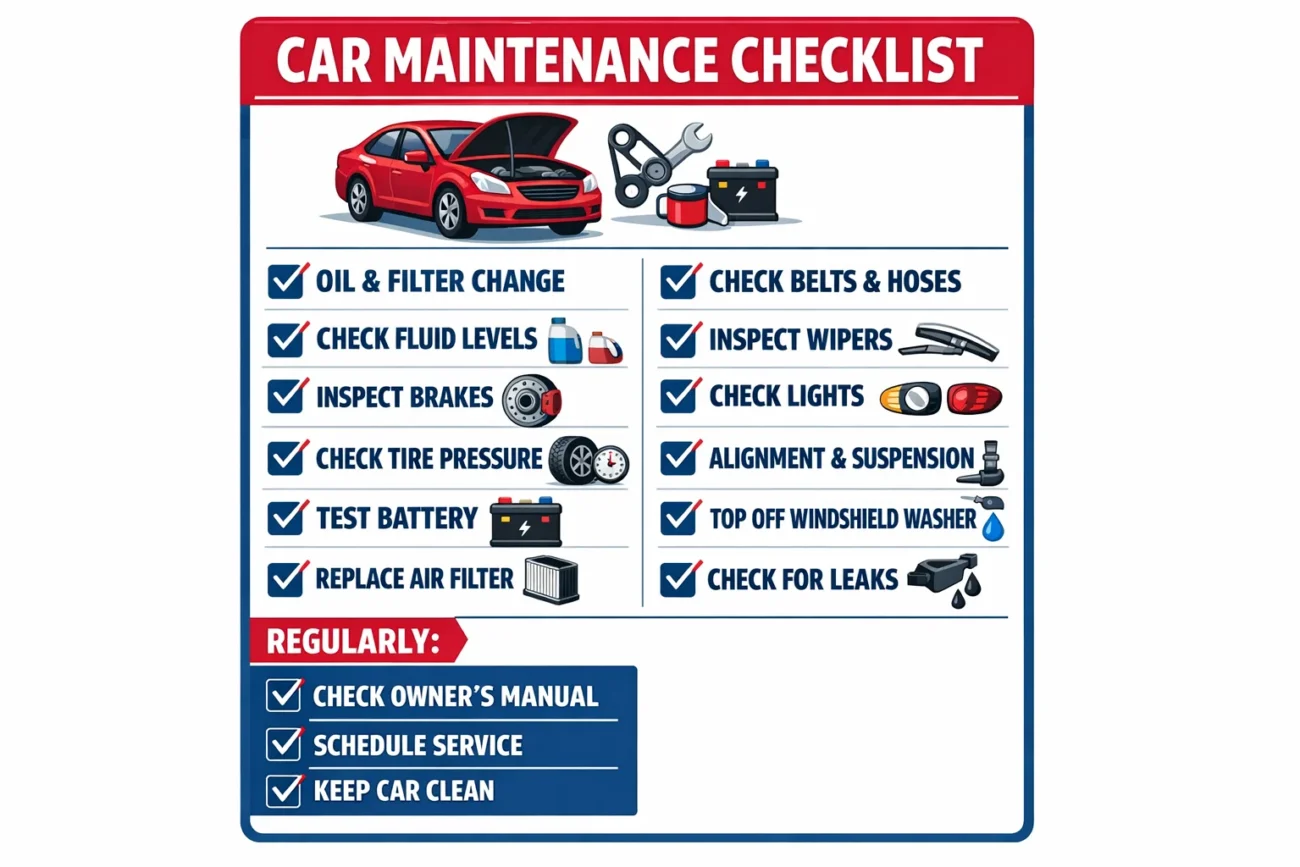
Owning a car comes with a significant responsibility beyond just fueling and driving. Regular upkeep is essential not only to ensure your vehicle’s longevity but also to maintain its performance, safety, and value. A car maintenance checklist is an invaluable tool for car owners, helping them systematically address critical areas of vehicle care.
Without a proper checklist, it’s easy to overlook essential components, which can lead to unexpected breakdowns or costly repairs. Whether you own a new model or a used car, following a structured maintenance routine is key to avoiding mechanical failures and ensuring a smooth driving experience.
Understanding the Importance of a Car Maintenance Checklist
A car maintenance checklist serves as a roadmap for vehicle care, outlining the tasks that should be performed daily, monthly, and annually. Regular maintenance prevents minor issues from becoming major problems. For instance, replacing worn-out brake pads on time can prevent damage to the rotors, saving hundreds of dollars in repairs.
A well-maintained car operates more efficiently, consuming less fuel and producing fewer emissions. By adhering to a structured checklist, drivers can also maintain their car’s resale value, as vehicles with documented maintenance histories are far more attractive to buyers.
Daily Checks to Include in Your Car Maintenance Checklist
A car maintenance checklist should begin with daily checks to ensure your vehicle is safe and roadworthy. Before starting your journey, inspect the tires for proper inflation and visible damage. Low tire pressure can lead to poor handling, reduced fuel efficiency, and even blowouts. Next, check the lights—headlights, brake lights, and indicators—to ensure they are functioning correctly.
Inspect the windshield and mirrors for cracks or dirt, and verify that your wipers are working effectively. Finally, a quick check of the dashboard for warning lights can alert you to potential issues such as low oil, coolant, or battery problems. These simple daily checks prevent accidents and ensure your vehicle is always ready for the road.
Weekly Car Maintenance Checklist
Weekly inspections go a step further, addressing components that may not require daily attention but are essential for smooth performance. Start by checking fluid levels, including engine oil, coolant, brake fluid, power steering fluid, and windshield washer fluid. Maintaining proper fluid levels ensures the engine and other systems operate efficiently. Next, inspect the tires for uneven wear patterns, which could indicate alignment or suspension issues.
Examine the battery terminals for corrosion and clean them if necessary, as a clean battery ensures reliable starts. Additionally, check the belts and hoses for cracks or fraying. Incorporating these checks into your car maintenance checklist weekly can prevent minor issues from escalating into costly repairs.
Monthly Car Maintenance Checklist
A monthly car maintenance checklist focuses on deeper inspections and preventative measures. Inspect the air filter, as a clogged filter reduces engine performance and fuel efficiency. Check the tire tread depth to ensure safe traction, especially in wet or icy conditions. Lubricate door hinges and other moving parts to prevent squeaks and stiffness. Examine the exhaust system for leaks or damage, which can affect performance and increase emissions.
Test the battery and charging system, especially if your car shows signs of slow starts or dimming lights. Monthly maintenance ensures that your vehicle runs efficiently and reduces the likelihood of unexpected breakdowns.
Seasonal Car Maintenance Checklist
Seasonal changes require adjustments to your car maintenance checklist to adapt your vehicle for different driving conditions. In winter, ensure your antifreeze levels are adequate and switch to winter tires if necessary. Check the heater and defroster systems to ensure safe driving in cold weather. In summer, focus on air conditioning performance, coolant levels, and tire pressure, as high temperatures can affect these systems.
Seasonal maintenance also includes inspecting wiper blades, as they often wear faster due to weather extremes. Adapting your checklist to each season ensures your car performs optimally year-round and minimizes weather-related wear and tear.
Essential Engine Maintenance on Your Checklist
The engine is the heart of your vehicle, and maintaining it is crucial for long-term reliability. A comprehensive car maintenance checklist should include regular oil and filter changes, as oil lubricates engine components and prevents overheating. Spark plugs should be inspected and replaced according to manufacturer recommendations, ensuring smooth ignition and fuel efficiency.
Monitor the timing belt and chain for wear; failure can result in catastrophic engine damage. Regularly check coolant levels and the radiator to prevent overheating, and consider flushing the cooling system periodically. Paying attention to engine maintenance prolongs its lifespan and ensures your car runs efficiently.
Transmission and Gearbox Maintenance
Transmission issues can be expensive, making it a critical part of any car maintenance checklist. Automatic transmissions require regular fluid changes to ensure smooth gear shifts, while manual transmissions benefit from periodic inspections of clutch performance and gearbox fluid. Listen for unusual noises or difficulty shifting gears, as these can indicate underlying problems. Transmission maintenance not only enhances vehicle performance but also prevents costly repairs that can occur if issues are ignored.
Brake System Maintenance Checklist
Safety starts with the brakes, making them a top priority on your car maintenance checklist. Inspect brake pads, rotors, and calipers regularly for wear and tear. Replace brake fluid according to the manufacturer’s schedule to maintain proper braking performance. If you notice any squeaking, grinding, or reduced responsiveness, address it immediately. Proper brake maintenance ensures your vehicle stops effectively, preventing accidents and extending the lifespan of braking components.
Suspension and Steering Inspections
A smooth and controlled ride depends on your car’s suspension and steering systems. Your car maintenance checklist should include regular inspections of shocks, struts, and steering components. Look for signs of wear, leaks, or uneven tire wear, which could indicate suspension problems. Properly functioning suspension enhances comfort, handling, and safety while reducing stress on other parts of the vehicle.
Tires are the only point of contact between your car and the road, making their maintenance vital. Include tire checks and rotations in your car maintenance checklist. Inspect tread depth and sidewalls for damage, maintain proper tire pressure, and rotate tires regularly to ensure even wear. Proper tire care improves fuel efficiency, handling, and safety while extending tire life.
Battery and Electrical System Maintenance
A weak battery or faulty electrical system can leave you stranded. Your car maintenance checklist should include inspecting the battery, cleaning terminals, and checking the alternator. Test lights, indicators, and other electrical components to ensure everything functions correctly. A well-maintained electrical system supports reliable vehicle operation and prevents unexpected failures.
Maintaining a clean exhaust system is crucial for performance and environmental compliance. Include exhaust inspections in your car maintenance checklist to identify leaks, rust, or unusual noises. Ensure emission control systems are functioning correctly, as faulty components can affect fuel efficiency and may fail regulatory inspections. Proper exhaust maintenance protects the environment and enhances vehicle performance.
Interior and Exterior Car Maintenance
While engine and mechanical components are vital, interior and exterior upkeep are equally important. Your car maintenance checklist should include cleaning and protecting the paintwork, checking windshield wipers, and ensuring mirrors and windows are intact. Interior maintenance involves cleaning upholstery, checking seatbelts, and ensuring dashboard controls work. Regular care keeps your vehicle looking great, increases comfort, and maintains resale value.
Documentation and Record-Keeping
A comprehensive car maintenance checklist isn’t just about physical inspections; it also includes maintaining records. Document all maintenance activities, including dates, services performed, and parts replaced. Keeping detailed records helps you track patterns, predict future maintenance needs, and provides proof of care for resale purposes. Organized records simplify troubleshooting and ensure nothing is overlooked.
How a Car Maintenance Checklist Saves Money
Investing time in a car maintenance checklist can save significant money in the long run. Preventative maintenance reduces the likelihood of costly repairs and extends the vehicle’s lifespan. For example, regularly changing engine oil is far cheaper than repairing a seized engine. Timely replacement of worn brakes, tires, or belts prevents damage to more expensive components.
Following a checklist also improves fuel efficiency, reducing your overall operating costs. In essence, a small investment of time and money on maintenance pays off in fewer repairs, better performance, and a safer driving experience.
Tips for Creating Your Personalized Car Maintenance Checklist
While general car maintenance checklists are helpful, personalizing one for your specific vehicle is ideal. Start by consulting your car’s owner manual for manufacturer recommendations. Note intervals for oil changes, tire rotations, and fluid inspections. Factor in your driving habits; frequent city driving may require more regular brake inspections, while long highway trips may demand additional engine checks.
Customize your checklist with daily, weekly, monthly, and seasonal tasks to ensure comprehensive coverage. A personalized checklist keeps you proactive rather than reactive, minimizing stress and unexpected breakdowns.
Using Technology to Manage Your Car Maintenance Checklist
Modern technology makes maintaining a car maintenance checklist easier than ever. Apps and digital tools allow you to schedule reminders for oil changes, tire rotations, and inspections. Some tools can even track service history, notify you of recalls, and provide estimates for upcoming maintenance. Leveraging technology ensures your checklist is always up to date and reduces the risk of missing critical tasks. Digital management of your car maintenance routine is both convenient and highly effective for busy car owners.
Conclusion
A car maintenance checklist is more than just a list; it is a vital companion that ensures your vehicle remains reliable, safe, and efficient. By following daily, weekly, monthly, and seasonal maintenance routines, you prevent minor issues from becoming costly problems. Regular checks of the engine, brakes, tires, suspension, electrical systems, and fluids help you maintain optimal performance and longevity.
Incorporating both physical inspections and record-keeping into your routine guarantees a well-cared-for vehicle. Whether you are a new car owner or an experienced driver, a thorough and personalized car maintenance checklist is your key to peace of mind on the road.
You May Also Read Here: Image search techniques
